TROPICAL TREE-RING NETWORK
Publications
List of publications coming out of our network:
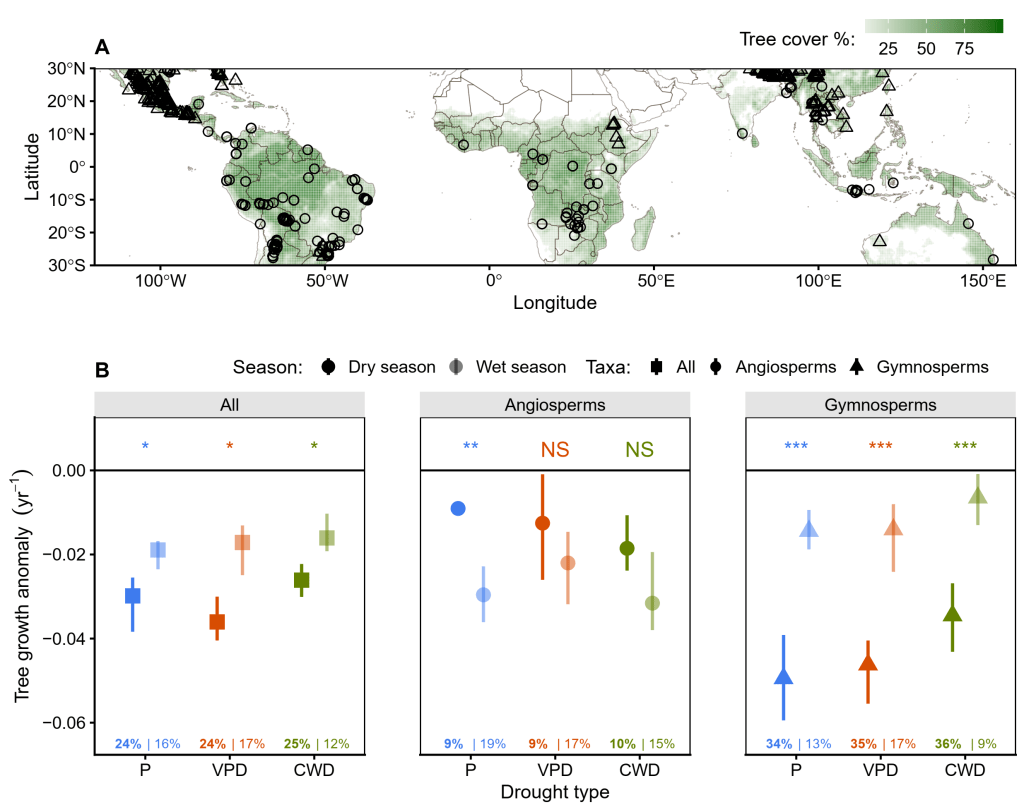
- Zuidema, P.A.; Groenendijk, P.; Rahman, M.; Trouet, T.; collaborators of the Tropical Tree-Ring Network*; Babst, F. (2025) Pantropical tree rings show small effects of drought on stem growth. Science. https://doi.org/10.1126/science.adq6607
In this study, we used over 20,000 tree-ring series from 483 sites to evaluate the impacts of droughts on tropical tree growth. We selected the 10% and 5% driest years since 1930 and used Superposed Epoch Analysis to evaluate their impacts on ring width. At the pantropical level, we found a modest stem growth decline of 2.5% (with a 95% confidence interval from 2.2 to 2.7%), but droughts caused >10% of growth declines in a quarter of sites. Drought impacts were substantially larger at hotter and drier sites, and for gymnosperms compared to angiosperms. Growth declines generally did not outlast drought years and were partially mitigated by growth stimulation in wet years. We conclude that pantropical forest carbon sequestration through stem growth has hitherto shown drought resilience. Yet, this may however, diminish under future climate change, due to increasing drought intensity and frequency.
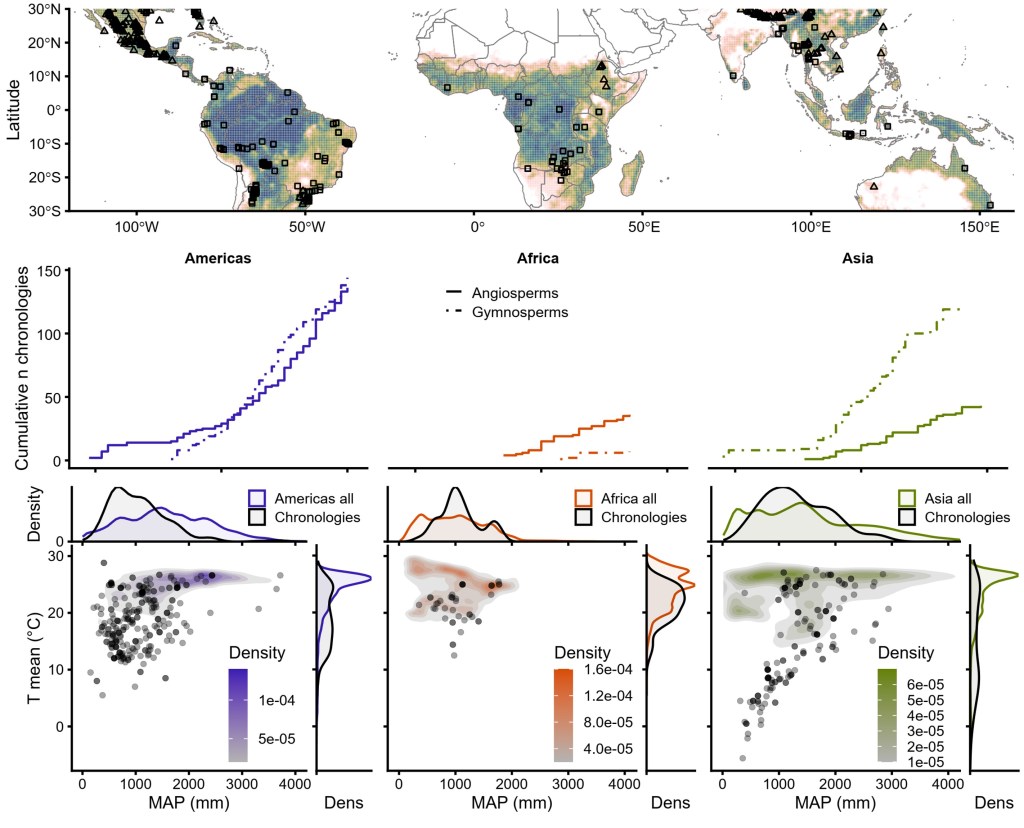
- Groenendijk, P.; Babst, F.; Trouet, V.; Fan, Z.; Granato-Souza, D.; Locosselli, G.M.; Mokria, M.; Panthi, S.; Pumijumnong, N.; collaborators of the Tropical Tree-Ring Network*; and Zuidema, P.A. (2025) The importance of tropical tree-ring chronologies for global change research. Nature Geoscience. https://doi.org/10.1016/j.quascirev.2025.109233.
In this study we conducted a quantitative assessment of tropical tree-ring chronologies to evaluate their potential for global change research. Compiling 492 ring-width chronologies from species known to form annual rings, we analyzed chronology quality, length, and climate sensitivity across climatic gradients. Although tropical dendrochronology has rapidly expanded, significant biases remain towards cooler, high-elevation sites, with notable gaps in warmer, wetter climates, Africa, and angiosperms. Chronologies from cooler and drier regions showed stronger climate signals and greater potential for long-term climate reconstructions. This study identifies high-potential regions and species, providing guidance for strategic expansion of tree-ring research to better understand tropical forest responses to climate change.
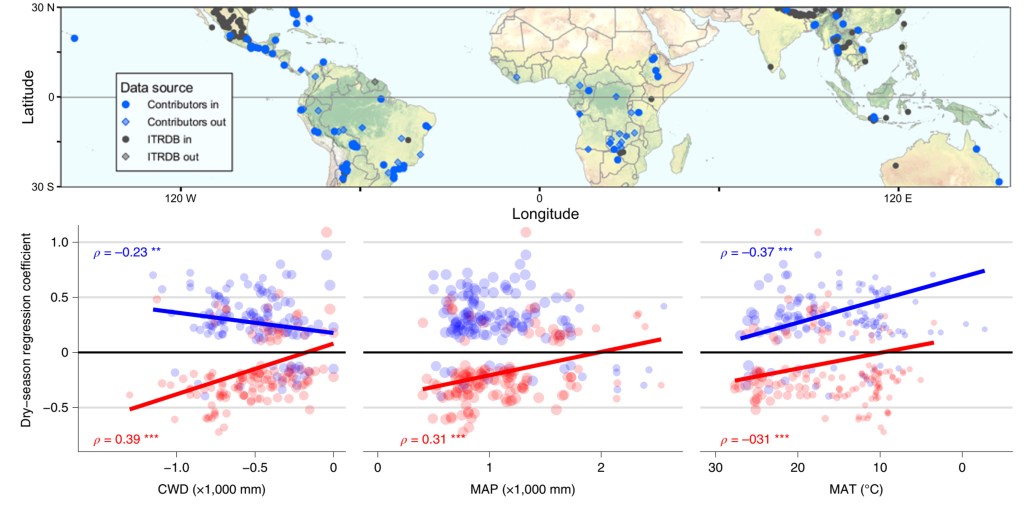
- Zuidema, P.A., Babst, F., Groenendijk, P., Trouet, V., et al. (2022) Tropical tree growth driven by dry-season climate variability. Nature Geoscience. https://doi.org/10.1038/s41561-022-00911-8.
In this study we used 14,000 tree-ring data series from 350 locations across the tropics to evaluate how climatic variables (rainfall, temperature, drought indices) affect the growth of tropical trees, during which season of the year these responses have the strongest effect on growth and whether there are large clusters of climatic response types.
We found that precipitation and temperature are the main drivers of tropical tree growth variability and that climatic responses can be grouped in four main clusters.
We also found that climate in the dry season is the main driver of tropical tree-growth variability and stem growth is reduced during years when the dry season is warmer and drier than normal. These results suggest that increasing drought and heat due to climate change may increase the sensitivity of tropical trees to climatic fluctuations.
 Tropical Tree-ring Network Website